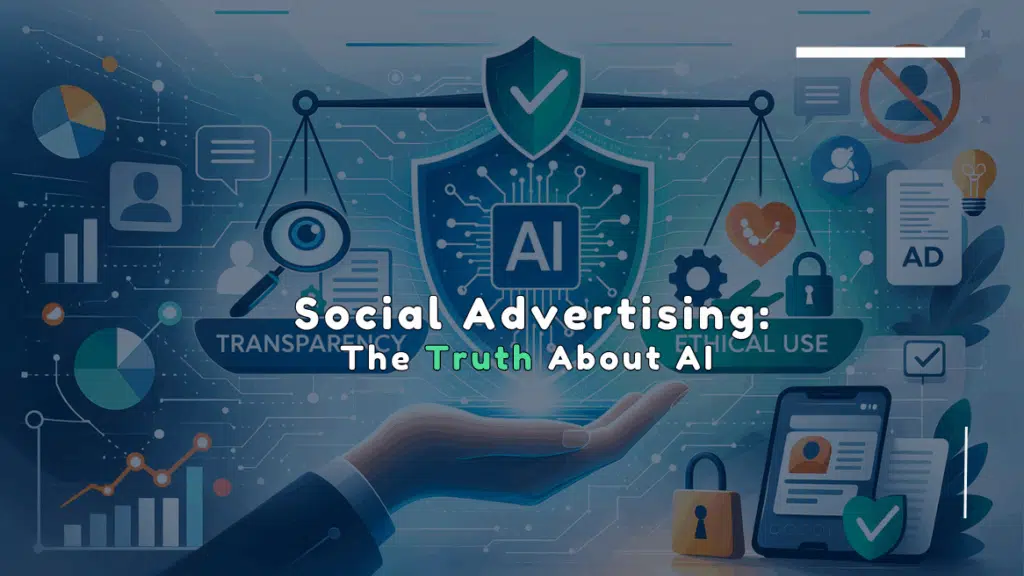
Introduction: AI Is Quietly Reshaping Social Advertising
If you work in digital marketing today, you’ve likely noticed how quickly artificial intelligence has become part of everyday campaign management. From audience targeting to automated bidding and creative generation, AI is now deeply integrated into platforms like Meta, TikTok, LinkedIn, and Google Ads.
For businesses running social media marketing campaigns or managing pay-per-click management, AI can dramatically improve efficiency. Campaigns learn faster, audiences are segmented more precisely, and performance insights are generated almost instantly.
But alongside those advantages comes a growing responsibility. As AI systems become more influential in advertising decisions, marketers must consider how these tools affect transparency, privacy, and fairness. Ethical concerns around data use, algorithm bias, and potential consumer manipulation are increasingly part of industry conversations.
The real challenge today is not whether to use AI in advertising, but how to use it responsibly.
What Ethical AI Advertising Means in Practice
When people talk about ethical AI advertising, they are referring to the responsible use of artificial intelligence within marketing systems.
In simple terms, ethical AI means ensuring that automation and data-driven decisions respect both consumer rights and brand integrity. Ethical advertising practices usually focus on three key principles:
- Transparency in how AI systems operate
- Fairness in audience targeting
- Responsible handling of consumer data
AI-driven campaigns are extremely powerful because they can analyze enormous volumes of behavioral information. But if that power is used without oversight, it can lead to issues like discriminatory targeting, privacy violations, or misleading advertising.
Responsible marketers treat AI as a tool that assists human strategy, not as a replacement for it.
Why Transparency Matters in AI-Driven Advertising
Transparency has always been important in advertising, but it has become even more critical with AI.
When automated systems determine who sees an ad, why they see it, and how often it appears, users naturally want to understand how those decisions are made. AI transparency in advertising typically involves explaining the following:
- How consumer data is collected
- How algorithms decide ad delivery
- How campaign results are evaluated
Clear communication about these processes strengthens trust and helps brands maintain credibility with their audience.
Transparency is also increasingly tied to compliance and regulatory expectations, meaning businesses cannot treat it as an optional extra.
How AI Is Used in Social Advertising Today
AI already powers a large portion of modern social advertising.
If you are running campaigns through an SMM service provider or managing ads internally, chances are AI is already working behind the scenes.
Examples include:
- Automated audience targeting
- Predictive campaign optimization
- Automated bidding systems
- AI-generated ad copy and visuals
- Performance forecasting
These technologies help businesses scale advertising faster than manual campaign management ever could. However, they also make it harder for advertisers to fully understand how decisions are made.
That’s why AI transparency marketing is becoming a key discussion across the industry.
Ethical Risks in AI Advertising
Despite the advantages of AI-powered marketing, several ethical risks have emerged.
Some of the most common concerns include:
Data misuse
AI systems rely heavily on user data. Without strong safeguards, this information can be collected or used in ways consumers don’t expect.
Algorithmic bias
AI systems learn from historical data. If that data contains biases, the system may unintentionally reinforce them in targeting decisions.
Manipulative personalization
AI can tailor messages so precisely that it blurs the line between helpful personalization and psychological manipulation.
Lack of transparency
Consumers may not realize when they are interacting with AI-generated content or automated messaging.
These concerns are why responsible AI marketing has become a central topic in modern advertising strategy.
Data Privacy and Responsible Targeting
Data privacy sits at the center of ethical advertising.
AI marketing systems depend on behavioral signals like browsing activity, interests, demographics, and past interactions. While this data helps personalize ads, it also raises important privacy questions.
Responsible advertisers prioritize the following:
- Clear consent mechanisms
- Transparent data collection policies
- Secure data storage
- Compliance with privacy laws
Transparency about data usage is particularly important because consumers increasingly expect to know how their information is used in advertising systems.
For an SEO service provider or digital marketing agency, maintaining strong privacy practices is essential to protecting both clients and audiences.
AI Content Disclosure and Consumer Trust
Another emerging issue is AI content disclosure.
With generative AI tools capable of producing images, videos, voiceovers, and written ad copy, consumers may not always know when they are interacting with AI-generated material.
Industry guidelines now encourage advertisers to disclose when AI is used prominently in advertising content.
For example, AI disclosures might include:
- Labels indicating AI-generated images
- Notes explaining automated content creation
- Transparency statements in advertising policies
These steps help prevent misleading impressions and reinforce trust between brands and audiences.
AI Compliance for Advertisers
Regulatory bodies are beginning to address AI use in marketing more directly.
New guidelines and legislation are emerging that require businesses to disclose AI-generated content or synthetic media used in advertising. For example, recent laws require advertisers to clearly indicate when digital performers or synthetic media are used in advertisements.
For marketers running PPC management campaigns or large-scale social advertising programs, staying compliant with these regulations will become increasingly important.
Compliance efforts often include:
- Documentation of AI systems used in campaigns
- Clear disclosure policies
- Internal governance frameworks
- Ongoing monitoring of AI decision-making systems
Best Practices for Responsible AI Marketing
Businesses that want to adopt ethical AI practices can follow several practical guidelines.
Maintain human oversight
Even the most advanced AI tools should be supervised by experienced marketers.
Audit algorithms regularly
Regular reviews help identify bias, data errors, or unexpected outcomes.
Implement AI disclosure policies
Transparency builds credibility and avoids regulatory issues.
Protect user data
Encryption, anonymization, and consent management should be standard practice.
Prioritize audience trust
Long-term relationships matter more than short-term ad performance gains.
Following these practices helps ensure the ethical use of AI in ads while still benefiting from automation and data insights.
Human Expertise Still Matters
While AI can analyze data faster than any human team, it lacks context and judgment.
Human marketers still play a crucial role in the following:
- Defining campaign strategy
- Interpreting audience sentiment
- Ensuring ethical boundaries
- Protecting brand reputation
The most effective advertising strategies combine AI efficiency with human creativity and oversight.
Ethical AI in PPC and Social Advertising
AI is now deeply integrated into PPC service platforms and social advertising tools.
From automated bidding strategies to predictive audience targeting, many pay-per-click management systems rely on machine learning models to determine performance outcomes.
But ethical oversight is essential here as well.
Advertisers must ensure:
- Automated bidding does not discriminate against specific audiences
- AI-generated ads remain truthful and accurate
- Targeting practices comply with platform and legal standards
Ethical AI advertising ultimately supports better campaign outcomes because it builds stronger trust with consumers.
Building an Ethical AI Marketing Strategy
Organizations that use AI responsibly tend to treat ethics as part of strategy, not an afterthought.
A strong ethical framework usually includes:
- Documented AI policies
- Internal compliance training
- Transparent communication with audiences
- Regular audits of advertising systems
By integrating ethics into everyday marketing decisions, brands can continue benefiting from AI innovation without compromising trust.
Conclusion: Trust Will Shape the Future of AI Advertising
AI will continue transforming how digital advertising works. It already influences how audiences are targeted, how ads are created, and how campaigns are optimized.
But the long-term success of AI in marketing depends on transparency and accountability.
Businesses that prioritize AI transparency, ethical decision-making, and consumer trust will be better positioned to succeed in the evolving advertising landscape.
Strategic Guidance for Ethical Advertising
If your business is exploring AI-driven advertising tools or expanding its social media marketing strategy, it’s important to approach automation responsibly.
At Eco York, we help organizations balance performance with transparency, combining ethical AI practices with data-driven digital marketing strategy.
As an experienced SMM service provider and PPC management partner, our goal is simple: help businesses grow while maintaining the trust of their audience.
If you’re interested in building advertising campaigns that prioritize both results and responsibility, Eco York is ready to help.
Ready to build transparent and ethical AI advertising campaigns?
Let Eco York help you create AI-driven social media and PPC campaigns that balance performance, transparency, and audience trust.