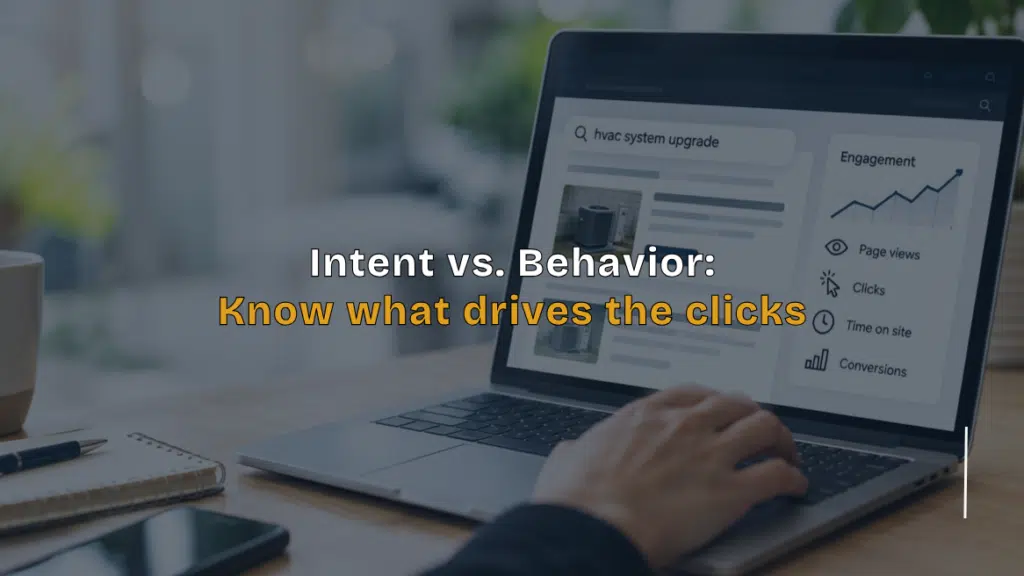
When businesses invest in paid advertising, one of the biggest questions is not simply where to advertise, but who to reach and when to reach them. Two approaches that often come up are intent-based advertising and behavioral targeting.
Both can help businesses reach more relevant audiences, but they rely on different signals. One focuses heavily on what someone is actively looking for, while the other looks at what that person has done online.
Understanding the difference can help you make smarter decisions about your advertising budget, campaign structure, and customer journey.
Intent-Based Advertising vs. Behavioral Targeting: What’s the Difference?
At a basic level, Intent-Based Advertising targets people based on signals that suggest they are interested in taking a particular action. Those signals might include search queries, website activity, product research, or other actions that indicate a current need.
Behavioral targeting takes a different approach. Behavioral Targeting uses patterns of past online activity, such as pages visited, content viewed, purchases, clicks, or interactions with a brand.
For example, someone searching Google for “commercial roofing contractor near me” is demonstrating a fairly strong level of intent. Someone who has previously visited several roofing websites may also be relevant, but their current buying intent is less certain.
That distinction matters when deciding how to spend your advertising budget.
Start With What the Customer Is Actually Trying to Do
Intent-based campaigns are strong because of timing.
A person searching for a specific product, service, solution, or answer is often further along in the buying process. Their search behavior can reveal what they need right now.
For example:
- “emergency AC repair near me” suggests immediate demand.
- “best CRM for small business” suggests research and comparison.
- “how much does commercial landscaping cost” suggests pricing research.
The goal is to align advertising with these signals so the message appears when it is most relevant.
This is one reason Beyond Keywords: Intent-Based Advertising Strategies for Google and Meta is a useful resource for businesses looking to go beyond basic keyword targeting.
Behavioral Targeting Looks at the Bigger Picture
Behavioral targeting is less about a single action and more about patterns.
Imagine someone visits several product pages, watches videos about a particular service, reads blog articles, and returns to your website multiple times. Those activities can help advertisers understand what interests that person.
Behavioral targeting can be particularly useful when building remarketing campaigns or reaching audiences with shared interests.
For example, a business might show an ad to people who:
- Visited a particular product page
- Engaged with previous ads
- Watched a specific video
- Interacted with a social media profile
- Previously visited the company’s website
The important point is that behavior indicates interest, but it does not always indicate immediate purchase intent.
Intent Signals and Behavioral Data Are Not the Same Thing
The difference becomes clearer when you look at the type of information each strategy uses.
| Factor | Intent-Based Advertising | Behavioral Targeting |
| Primary signal | Current interest or intent | Past online behavior |
| Typical examples | Search queries, product research | Website visits, clicks, content engagement |
| Best suited for | Capturing active demand | Building and nurturing audiences |
| Timing | Often closer to a purchase decision | Can work across the customer journey |
| Common platforms | Google and search advertising | Google, Meta, display, and social platforms |
| Main advantage | Reaches people actively looking | Reaches people based on demonstrated interests |
Neither approach is automatically better. The right choice depends on your campaign objective and where your audience is in the buying journey.
When Intent-Based Advertising Has the Edge
Intent-based advertising tends to be especially valuable when customers actively search for solutions.
Search advertising is a good example. Someone who searches for a service has already taken the initiative to find information. A well-structured campaign can put your business in front of that person at exactly the right moment.
This can make Intent-Based Advertising particularly effective for:
- Lead generation
- Local service businesses
- High-intent product searches
- B2B services
- Emergency or time-sensitive services
- Comparison and purchase-related searches
It also gives advertisers an opportunity to create different messages for different levels of intent rather than showing everyone the same ad.
Where Behavioral Targeting Fits Best
Behavioral targeting can shine when the goal is to reconnect with people or build awareness over time.
Consider someone who visits your website but leaves without filling out a form. That person may not have been ready to convert. Showing relevant advertising later can bring the brand back into consideration.
Behavioral targeting can also support:
- Remarketing
- Brand awareness
- Product discovery
- Audience segmentation
- Social media campaigns
- Customer retention
For a deeper look at audience-focused strategies, Audience Targeting Strategies That Improve Social Media Ad Performance can complement this discussion.
A Better Strategy May Use Both
Businesses do not necessarily have to choose one approach and ignore the other.
In many campaigns, intent and behavioral signals work better together.
For example, a business could use search advertising to reach people actively looking for its services. It could then use remarketing to reconnect with website visitors who did not convert.
That creates a more complete advertising funnel:
Intent → Website Visit → Engagement → Remarketing → Conversion
This approach can also make PPC Management Services more effective because campaign decisions are based on different stages of customer behavior rather than one targeting method.
Google and Meta Don’t Approach Targeting the Same Way
Platform differences are important.
Google advertising is naturally well suited to intent because search queries provide direct insight into what someone is looking for. Advertisers can build campaigns around keywords, search themes, locations, and other signals.
Meta advertising, including Facebook and Instagram, is more centered around audience characteristics, interests, engagement, and behavioral signals. It can be particularly useful for discovery, awareness, remarketing, and reaching audiences before they actively search.
That does not mean Google is only for intent or Meta is only for behavior. Both platforms offer increasingly sophisticated targeting options, and the best strategy depends on the campaign.
Choosing the Right Approach for Your Business
Before choosing a targeting method, start with the business objective.
If you need to capture people who are already looking for a solution, intent-based advertising may deserve more attention.
If you need to build awareness, reconnect with previous visitors, or nurture potential customers, behavioral targeting may be more useful.
Ask yourself:
- Is my audience actively searching for what I sell?
- How long is the typical buying cycle?
- Do customers need multiple interactions before converting?
- Am I trying to generate immediate leads or build demand?
- Which platforms does my audience actually use?
These questions can help shape a more practical Digital Marketing Service strategy instead of forcing every campaign into the same targeting model.
Targeting Can Make or Break Social Campaign Performance
With Social Media Advertising, targeting decisions directly affect who sees your ads and how efficiently your budget is used.
A highly specific audience is not always the answer, either. If an audience becomes too narrow, you may limit delivery and miss potential customers. If it is too broad, your ads may generate engagement without enough meaningful conversions.
The solution is to test.
Compare different audience groups, messages, offers, and campaign objectives. Then look beyond clicks. Conversion rate, cost per lead, qualified leads, and revenue provide a much clearer picture of whether targeting is actually working.
For more context, see Social Media Advertising Effectiveness: Targeting, Cost, and Measurable Results.
Avoid These Common Targeting Mistakes
Even a strong targeting strategy can underperform when the fundamentals are overlooked.
Common problems include:
- Targeting based on assumptions instead of campaign data
- Using the same audience for every campaign
- Ignoring search intent
- Making audiences unnecessarily narrow
- Focusing on clicks instead of conversions
- Failing to refresh creative
- Running remarketing without considering the customer’s stage
- Not testing different targeting approaches
Good targeting is not a one-time setup. It should evolve as you learn more about your audience and campaign performance.
Build Your Advertising Strategy Around Real Customer Signals
Intent-based advertising and behavioral targeting serve different purposes, but they can complement each other extremely well.
Intent helps you capture demand when someone is actively looking. Behavioral data can help you stay connected with people who have already interacted with your brand. Used together, they give businesses more opportunities to reach the right audience at different points in the customer journey.
The goal is not simply to reach more people. It is to reach more relevant people with the right message at the right time.
For businesses investing in PPC and social campaigns, that distinction can make a meaningful difference in both advertising efficiency and overall marketing performance.
Turn Better Targeting Into Better Campaigns
Not sure whether your business would benefit more from Intent-Based Advertising, Behavioral Targeting, or a combination of both? Eco York can help you evaluate your current campaigns, understand your audience signals, and develop a targeted advertising strategy built around your business goals.
Whether you’re looking to improve PPC performance, strengthen Social Media Advertising, or make better use of your advertising budget, our team can help you identify opportunities and turn data into actionable campaigns.
Ready to reach the right audience with the right message?
Explore your current targeting, identify opportunities, and build campaigns around the signals that matter most to your customers. Get Your PPC Strategy Review
Frequently Asked Questions
Is intent-based advertising better than behavioral targeting?
Not always. Intent-based advertising is often stronger for capturing active demand, while behavioral targeting can be valuable for remarketing, awareness, and audience development.
What is an example of intent-based advertising?
A Google ad shown to someone searching for a specific product or service is a common example of intent-based advertising.
What is an example of behavioral targeting?
Showing an ad to someone who previously visited your website or interacted with your content is a common example of behavioral targeting.
Can businesses use both strategies together?
Yes. Combining intent and behavioral signals can help businesses capture active demand while continuing to engage people who have already interacted with the brand.
How does targeting affect PPC performance?
Better targeting can improve relevance, conversion opportunities, and budget efficiency. Evaluate performance using conversions and business outcomes, not clicks alone.